Coming of age…

Part of being a writer is observing the connections, coincidences and ironies in everyday life; we rejoice in comparing, analysing and making meaning from otherwise unrelated events.

Perth author, Lynne Leonardt, recently wrote:

“Whether you enjoy a book often depends on where you were, what you were doing and what was going on around you; in general, what food for thought your impoverished soul was hungering for at the time.”

Now, herein lies the coincidence: I was only meditating on Lynne’s notion the other day. You see, many of my favourite novels are the ones I read during my formative years. I wonder if they would still hit the mark now; or, if I’d ‘kill’ them, like when I killed The Dark Crystal by watching it as an adult.

I was recently reading through Annabel Smith’s old blog posts and found a list of novels she thought over-hyped (see post here). One of them is a book I read at least five times between the age of seventeen and twenty. I still list it in my ‘Favourite Novel List’, even though I haven’t read it in ten years. It spoke to me at the time. Upon reflection, I’m wondering if it would still speak to this thirty year old mother of two; a thirty year old who has let go of a lot of the angst and insecurity. Before I reveal the title, I’ll tell you what Annabel said of the novel:

“Perhaps one of the most overrated books of all time, it seems to whip all those arty, pseudo-intellectual types into a frenzy. I found it flawed in many respects and a little pretentious.”

Oh, goodness. The title could be “KRISTEN LEVITZKE, AGED NINETEEN” because her summary,  is, unfortunately, probably a rather accurate description of me at nineteen. Undergraduate Arts degrees are much wasted on the young…

The novel is, of course, The Secret History by Donna Tartt. I feel compelled to reread it and see if my feelings have changed. Somehow, I doubt they will, because I bloody loved that book. I’m reading The Marriage Plot by Jeffrey Eugenides at the moment, and it actually reminds me of Tartt’s novel in some way. It begins as an American campus novel and weaves plenty of obscure, and possibly pretentious theory within. Maybe it appeals to my vanity; for once, I know something (even if it is just the name of a long forgotten theorist or feminist performance artist!). Maybe it’s because it validates my arts degree; makes me feel like studying English and Philosophy and Fine Arts and History has some kind of currency. Or maybe I’m still a bit of a wanker. Either way, I hope that one day, I can write my own semi-autobiographical bildungsroman set in Perth’s very own leafy green UWA campus. It will have a really great charcter arc…I hope.

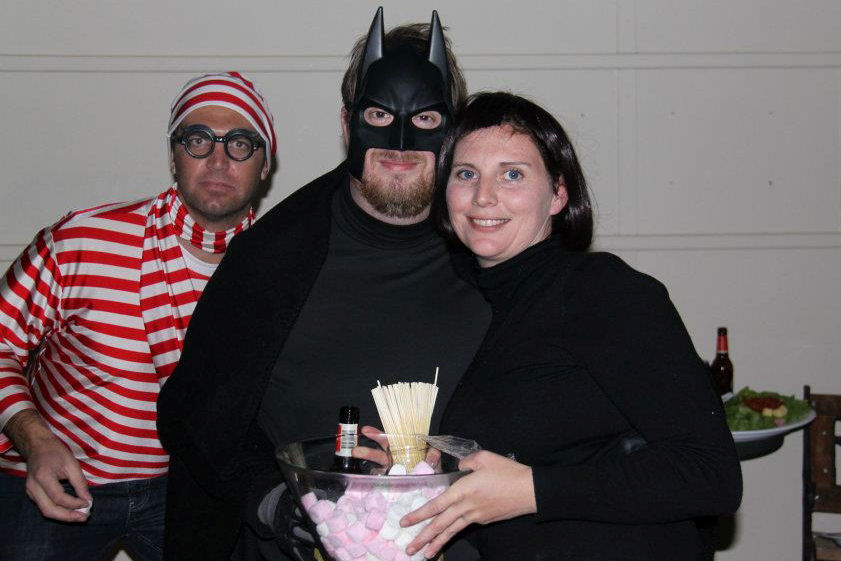
It’s my birthday next week, so it’s nearly a year since I had a bit of a wanky  30th birthday fancy dress party. I went for a tongue-in-cheek and WARM costume, dressing as Donna Tartt: the quintessential, stereotypical writer; reclusive, pretentious, clad in black, and ‘Louise Brooks’ bobbed.
557230_10151153273568694_135074749_n

Can you find Wally?

blog

This was the invitation, and everyone ‘came to the party’, so to speak, with their costumes. It was a bit like being in one of my favourite Woody Allen movies, Midnight in Paris. I hobnobbed with all sorts of literary and artistic figures: Frida Kahlo, Jay Gatsby, Woody Allen, Charlotte (of the web!), Alice, The Mad Hatter, the Queen of Hearts, Miss Marple, Waldo, Mary Poppins, Robin Hood, Banksy, Sherlock Holmes, Little Red Riding Hood, Friar Tuck, Batman, Lady Macbeth, Arthur Dent, Biggles, Jamie Lannister, Cersei Lannister, Rogue, The Chimney Sweeper, Batman, Elizabeth Bennett, Titania, Hermione… it was a night I’ll never forget.

‘Words are our most inexhaustible source of magic’

IMG_2924

I’m back from a truly magical holiday with my extended family. There were ten of us in total; six adults to four children- a perfect ratio. Upon reflection, I can see that the aforementioned ‘magic’ can be wholly attributed to storytelling. In life, we generally create our own fictions, or immerse ourselves in bookish or cinematic ones. At Disneyland and Universal Studios, we were thrust headfirst into new worlds where we barely needed to suspend disbelief. I have: dodged hostile indigenous peoples in the Amazon; survived supernatural forces at Mystic Manor; been attacked by mummies; fallen off the top level of a sky scraper; been commended for my bravery by Optimus Prime; and flown through space with Elmo. Not only did I get to experience the magic myself, but I observed true wonder and enchantment in the faces of my children. If I die tomorrow, I’ll die happy.

But…on to more traditional modes of storytelling…

13526165

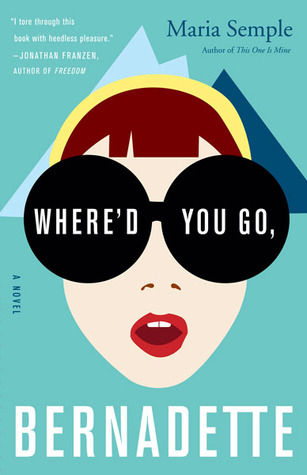
The first fictional world that had me wholly captivated  on this holiday was a book recommended to me as a ‘great holiday read’ by Perth author, Annabel Smith. I read this sharp, satirical novel, Where’d you go Bernadette?,  in one sitting (only interrupted by in-flight service and children spilling drinks) and it was such a pleasure. The narrative structure was very clever; the characters and stories are revealed through emails, documents and a little bit of first person narration by Bernadette’s daughter. The fully fledged, immediately endearing characters were a highlight for me; Microsoft ‘wunderkind’ Elgie; creatively stunted architect and resident misanthropic agoraphobic, Bernadette; long-suffering but high-achieving daughter, Bee; and the uppity school mums who never degenerated into stereotypes. After I read this novel, it came as no surprise that the author, Maria Semple, was a writer for Arrested Development, one of my favourite TV comedies.

 
This novel was about something very close to my heart; the inherent danger in ignoring or deliberately quelling your own creative compulsions. In my own novel (for which I am currently seeking publication) one of my characters warns, ‘You can’t be a mother AND an artist’. Of course the truth is, if you are, by nature, an artist (or a scientist or passionate about anything in particular!) then you have to nurture those impulses, or you just might go mad like our long-suffering protagonist, Bernadette. Parenthood or an inane ‘day job’ can often get in the way of exploring our passions, but Bernadette is a cautionary tale for us all; we all need to find fulfilment in our own way. I’m always particularly interested in motherhood in this context. In the early days with a newborn (and all the intense transitions entailed) it’s easy to convince oneself that milky snuggles and domestic management will be endlessly soul satisfying; indeed, it’s important work, the work of mothers (read: parents). But as children grow up, it becomes abundantly clear that most modern women need interests (be it craft or astrophysics!) outside of their offspring, lest they go bonkers. Poor Bernadette is an obstructed hot spring and she’s about to blow.

Where’d you go Bernadette? is a humourous and poignant take on mental illness and anxiety. I had an interesting conversation with some other writers in the comments section of Natasha Lester’s great blog. We were talking about how writers seem to have a tendency to catastrophise and we joked about establishing some hard data. If you’re a writer, and you’re reading this, please, give us some anecdotal data (hard data is probably a bit ambitious!). Catastrophiser? Yay or nay?

I teach children with SLI (Specific Language Impairment) and anxiety tends to be an issue for these kids. As a worrywart from way back, I’m finding the mandated program that I’m currently delivering at school very useful. It’s nice and simple: are you having a red thought or a green thought? A red thought goes like this: ‘nobody likes me, everybody hates me…I think I’ll go and eat worms.’ You get the picture.

I have a long history of catastrophising but, in recent years, I’ve learnt to curb the negative thinking. It helped when I had my second child- I was able to spread my intense anxiety (those first years with your first child are HARD) across the two children instead of fixating on one. I’ve realised, that for me, it is the same with having dual careers; when I’m teaching, I can’t fret about my writing; when I’m writing, I can’t freak out about tomorrow’s parent interview. It’s a great system.

 Good novels like  Where’d you go Bernadette?  make us reflect on these kinds of issues, so, even though I’m happy to return to Disneyland any old day, books will always be my favourite form of fiction. To quote one of my favourite literary characters, Albus Dumbledore:

‘ Words are, in my not so humble opinion, our most inexhaustible source of magic.’

In other news:

The flamingoes in Alice Nelson’s The Last Sky inspired me to have a look at beautiful Kowloon Park. I now have a thing for flamingoes. I love saying the word and I love their pale pink, plasticine-like feathers.

IMG_8277

I never thought I’d say this, but I loved the Transformers ride at Universal Studios the most. It was absolutely mind-blowing.

transformers

Thought of the day: Reading as Empathy Training

I firmly believe that compassion is a choice; it’s not necessarily something that we feel instinctively; rather we arrive at compassion after due consideration. When an individual decides to step inside the world of a novel, he is making a choice to look at life from another perspective, and I think that experience nurtures the ability to empathize. I wonder if prolific readers are generally more compassionate. I wonder?

I’m not into hot-housing my kids academically, but I’m all about instilling values. I think there’s nothing more important than kindness; making the choice to be kind. So I’ll continue to hot-house Thom and Lewis with every book I can get my hands on.

In other news:

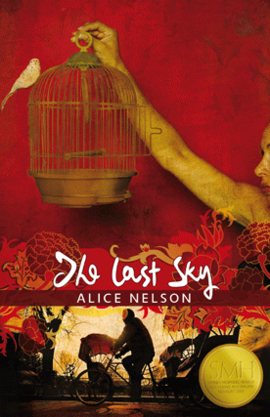
9781921361920_THELASTSKY_NEWEDITION

I’ve nearly finished The Last Sky by Alice Nelson. The prose is damn beautiful; I can barely fault it. But the plot is meandering and meditative; it is a dreamy contemplation of storytelling. I can’t say that it’s a novel I’m desperate to return to after each sitting, but maybe that’s because I’ve had a very busy couple of weeks and I’ve read it intermittently; it’s only a short novel, so maybe it would be better read in one session. So far, (and I have about 50 pages left), I’ve found some of the characters (Victor Kadoorie and Ken Tiger in particular) quite thinly drawn. Maybe that’s because the narrator, Maya, is making Victor’s story her own; dissatisfied with the mere facts she seeks to fill in the gaps with her own details. Maya longs for a ‘cohesive narrative‘ and creates her own fictions when the facts are but a ‘dry outline‘.

With those very brief nuggets, I bid you adieu. I’m off to Disneyland tomorrow and I intend to have a bit of a break from the internet. Maybe I’ll pop in with a picture of Goofy…

hkgap_phototour48

Australian faux pas and Silly Novels by Silly Lady Novelists

Well, hasn’t it been a week for women in Australia? I hardly need to count the ways in which misogyny has reared its ugly head, but, for future reference, I will: our PM, Julia, faced a barrage of media-driven nonsense; there was the vile Liberal party dinner menu where rich men poked fun at her body; her breasts, her thighs, and her vagina. Then of course, Mr Sattler pursued a line of questioning about Julia’s partner’s sexuality. She was calm and graceful in her response; I can tell she has bigger things on her mind than the insinuations of a twerp like Sattler. I’m lucky: I don’t think I know many men of the ‘back-slapping’ variety; the men I know and love are mortified by this crap.

I saw this picture in my Facebook feed yesterday and I love it:

1003103_10151403436151455_636387599_n

But how does all this pertain to the writing life? There was a lot of noise on Twitter and in the blogosphere about the Stella Prize a few weeks ago. The question raised: do we need a prize for women? I say yes, in the hope that any male reader worth their salt will pick up the shortlisted novels.  Today I discovered a whole website that encourages just this: http://guysreadgals.wordpress.com .

Women are writing some great stories, as evidenced here:

944592_583479745018935_1093722336_n

Barry Divola’s tongue in cheek ‘sausage’ comment made me smile. If you don’t know about the background, look up ‘Miles Franklin’ and ‘sausage fest’. We’re all about the faux pas here in Oz.

I’ve been thinking about George Eliot quite a bit since my post about Elemental and The Mill on the Floss. I went back and read parts of her essay, Silly Novels by Silly Lady Novelists. I laughed aloud at some of the observations; observations that would ring true today.

It made me laugh, but here’s the thing: I think that, at least in today’s social milieu, these are intellectually elitist observations. Let’s be honest, not everyone in Australia can read the highest calibre of literary fiction. Some novels would read like Chinese characters to people who merely function at a late decoding or early comprehension stage of reading. Heck, some literary fiction is incomprehensible for me and I have an English degree. What I’m saying, is that I’m glad there are silly novels out there (by silly males and silly females- actually, sales might suggest their authors are not so silly!); maybe they’re a stepping stone on the journey to better fiction. Or they just provide vacuous entertainment for a few hours. Either way, who are we to judge?

Eliot’s major concern was that certain histrionic rantings typical of a particular genre would perpetuate feminine stereotypes. I sympathize with that sentiment.  Still, I’m going to make a case for contemporary commercial fiction here, because I have a bit of ‘underdog complex’ happening. What one reads shouldn’t be a value statement, because we’re all valuable. If melodrama and frothy prose are your thing, no probs. Vampires and misogyny? Go for it. At least you’re reading. I know plenty of well-educated women who read crap and not-so-crap commercial fiction for pleasure. And some of us (ahem) are known for our histrionic rantings.

I had an interesting chat with a good friend of mine the other day. She told me that she’s not a huge fan of my writing style; in fact, she only read half of Solomon’s Baby because she wasn’t wholly engaged. She feels that my sentences are too long; they require re-reading. I love this friend, I love her candour. I admire her for her insane intellect and her unwavering honesty. We’ve developed a sister-like relationship so we’re honest about our feelings, even when it hurts. Of course, feedback like this always stings a little bit; I’d be a liar if I said it didn’t.  But I’d also be stupid if I thought everyone should like my style. Goodness, I’m a writer; rejection comes with the territory!

What was most interesting about our conversation was that old chestnut, ‘What’s the difference between commercial and literary fiction?’
Is commercial fiction vacuous and populist? Most of the time, not always.  Does it sell better? Yes. Is serious fiction more obscure? Does it require more of the reader? Yes, I think so. Is serious fiction as entertaining, as pleasurable, as a light romp? Yes, indeed: it’s like the Kama Sutra for ten days straight when good literary fiction hits the mark.

It’s such a subjective thing though, isn’t it? The gatekeepers of the literary world, the publishers, the critics, seem to decide. In saying that, for me, serious fiction is about brilliant prose, complex characters, imagined worlds that I can sense in a visceral way. Most of the time, as I read literary work, I wonder if the author is a bit of a genius. I felt that way when I read Elemental. I feel that way at the moment, as I read The Last Sky by Alice Nelson (I believe she was in her early twenties when she wrote it??!! Genius.). Nelson and Curtin’s work is the real deal. Reading this kind of writing is part of my apprenticeship and the experience of good fiction can be transcendental; goosebumps, heightened senses, an ache in my throat, tears all a-prickle. That doesn’t mean to say that there is no place for commercial fiction in my life. I read the Twilight series in two days; NOT transcendental, but it definitely served a purpose at that particular time: escapism and relaxation (except for when I bristled at awkward turns of phrase or creepy gender interplay!).

You see, when asked to pigeonhole my work, I’ve been hesitant to call it literary fiction or serious fiction, because I’m full of doubt, and, like most writers I know, quite self-deprecating when it comes to my work. I’m just not sure that it’s good enough to be called literary fiction. Actually, right now, I know it isn’t of Curtin’s or Nelson’s calibre. I met an insightful woman in Margaret River who suggested that my work might be ‘commercial fiction with integrity’. I’m intending to purloin that phrase forevermore. At least until the doubt disappears…yeah, probably never.

My bedside table…

What’s on yours?

books

I’m off to Hong Kong next week so I’m reading Alice Nelson’s The Last Sky as a taster.

Annabel Smith recommended Where’d You Go Bernadette by Maria Semple as a great holiday read; I’m saving that one for the plane.


My thoughts on Gatsby, ‘Whisky Charlie Foxtrot’ and boys…

I saw Baz Lurhmann’s The Great Gatsby the other night. Part of me wants to launch into a great tirade and say he defecated glitter all over one of my favourite books…but the truth is, he’s a wonderful auteur and I knew what I was getting myself into. Baz’s Gatsby is not my Gatsby, but it’s a rather beautiful film nonetheless. My version of Gatsby was never, ever, remotely camp: definitely decadent, hedonistic in parts, but never camp. I read the novel at high school, then again at university and while my recollections are faded, I remember the prose as spare, the tone wistful.

I’ll read The Great Gatsby again soon I imagine, as an adult. There aren’t too many broken dreams for me at the moment; the green light is still flashing on the horizon. But I was reflecting after the film and I realised that one of my green lights has fallen away, only to give way to others. You see, I wanted a daughter in a truly irrational way. As a woman with great relationships with her own mother and grandmother, I saw my imagined daughter as an integral part in my future life. I won’t bore you with the psychoanalysis and flawed thinking, but I’m embarrassed to say that I grieved a little bit when the dream faded to black; when I realized that I didn’t want any more children.

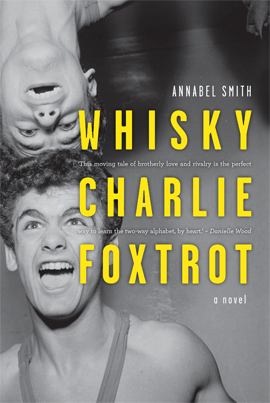
This is where I’ll segue to the subject matter I intended to write about this morning: I didn’t come here to talk about Gatsby; I wanted to write some thoughts on boys, wonderful boys, after reading Annabel Smith’s most recent novel, Whisky Charlie Foxtrot. You see, I have met some lovely Perth writers recently and I’m keen to read their work. Annabel has also kindly offered to mentor me in a two hour session next week. I’m most excited (and of course, a little terrified!).

9781922089144_WHISKYCHARLIEFOXTROT_WEB

I want to be plain: I will always write my genuine thoughts on a text; I won’t mince my words.

I needed to write that disclaimer because I don’t want anyone to think that I’m brownnosing. I’ll begin…

I grew up in Perth in the eighties and Whisky Charlie Foxtrot is set in a familiar place: there are the requisite walkie-talkies and Scaletrix; the recognizable playground chatter. The narrative revolves around the relationship between two brothers, identical twins, Charlie and William (aka Whisky) Fern. I have two sons so I’m very invested in the themes explored in the novel. My personal sense of nostalgia and interest in boys and ‘boyhood’ meant that I was hooked pretty quickly.

I’m always delighted by books in which my sympathies shift; where the unreliable nature of any narration comes to the fore. I’m reminded of a line from Elemental by Amanda Curtin (I can’t check it because my grandmother is reading it now!), ‘there’s no one can tell a story true.’ Charlie is flawed, but I developed a deep affection for him and his loved ones. It was a sad goodbye as I turned the final page.

I learnt something that bothered me in this novel; the term ‘puerile’ comes from the latin word puer, meaning ‘boy’. What is striking, of course, is the word’s negative connotations within our current vernacular. Think: Slugs and snails and puppy dogs tails. Like exclamation marks and instant coffee, poor children of the male variety get a seriously bad rap.

Now, I have a lot to do with young boys aged between three and ten. Honestly, I am surrounded by them; my mothers’ group produced only boys- first, second and third generation. That’s twelve boys- we could probably go off the grid or provide power for Synergy. I work at a Language Development Centre where boys are our main clientele. I have an older brother who tormented me with his puerile behaviour during our youth (we’re great friends now). I can say, hand on heart: boys are different. By god, they are different to girls. But they are different, not worse. Obviously, there is a spectrum- from your most puerile (and by that, I’ll go with the current understanding of the term: immature, foolish) to more restrained or effeminate boys, but anyone who wants to launch into a nature/nurture debate, please, come and spend a day in my classroom.

Sometimes women find boys difficult to manage; hard to understand. But boys are wonderful. They can be energetic and boisterous but equally thoughtful and kind. Their sense of humour tends towards the gross but sometimes their jokes are so sophisticated that they have me laughing out loud. They sometimes show they love each other with jibes and endearing name calling (if you can call ‘Snot Face’ a term of endearment- there’s rarely any offence taken); sometimes they cuddle and kiss and declare their enduring love for one another. They wrestle and nearly kill each other; they sometimes show off, they occasionally lash out in a retaliatory moment of rage at some perceived injustice…I could write a whole blog post entitled, ‘In Defence of the Boy Child’, but I won’t, I promise. You’re wise folk out there; you know about boys.

I had goose bumps on page 268, where I read a passage that echoes some of my own sentiments; a recent epiphany, if you will. I don’t want to give too much away so I’ll just be choosy about my quote:

‘love him for who he was… I wouldn’t change a hair on his head’

You see, as mothers and fathers, we have to learn pretty quickly that we can’t pin our hopes and dreams on our children. We have to recognise that they have their own ‘green lights’ and we have to respect them. My two boys have very different temperaments and I have learnt that there are things I cannot change; that no amount of behaviour modification is going to sedate an exuberant personality or make an extrovert an introvert (or vice-versa). And why on earth would anyone want to? Human nature and ego, that’s why. But, as in Whisky Charlie Foxtrot, parents have to learn an important lesson: we have to let our children be who they are, or there will be inevitable ramifications.

I read this novel in two sittings and it would have been one if I hadn’t started at 11pm on the first night. There are so many astute and quaint observations about sibling rivalry, jealousy, parenting and love in this novel. I’m going to end on something that made me smile: I felt immediate recognition during the ballroom dancing scenes; like me, the girls of Smith’s book were probably raised on a steady diet of Dirty Dancing and Grease, and have thus developed a liking for guys of Swayze and Travolta’s ilk who have ‘the moves like Jagger’. Go Charlie Fern with your fabulous foxtrot!

IMG_0845

Is it just me, or did autumn arrive late this year? It’s my favourite time of the year; when the air turns crisp and the leaves turn red but the sky stays brilliant blue. Autumn restores my cooking mojo and makes me feel like nesting, makes me want to prepare for winter. I love the rituals when the seasons turn; I love my non-work days, when I can bathe my boys in bubbles and then pull out the onesies and make them all cosy; when I can make slow cooker meals in the morning and catch a whiff of the hearty aroma all day long…Oh Perth, how I love thee.

Elemental by Amanda Curtin

butterfly biscuit

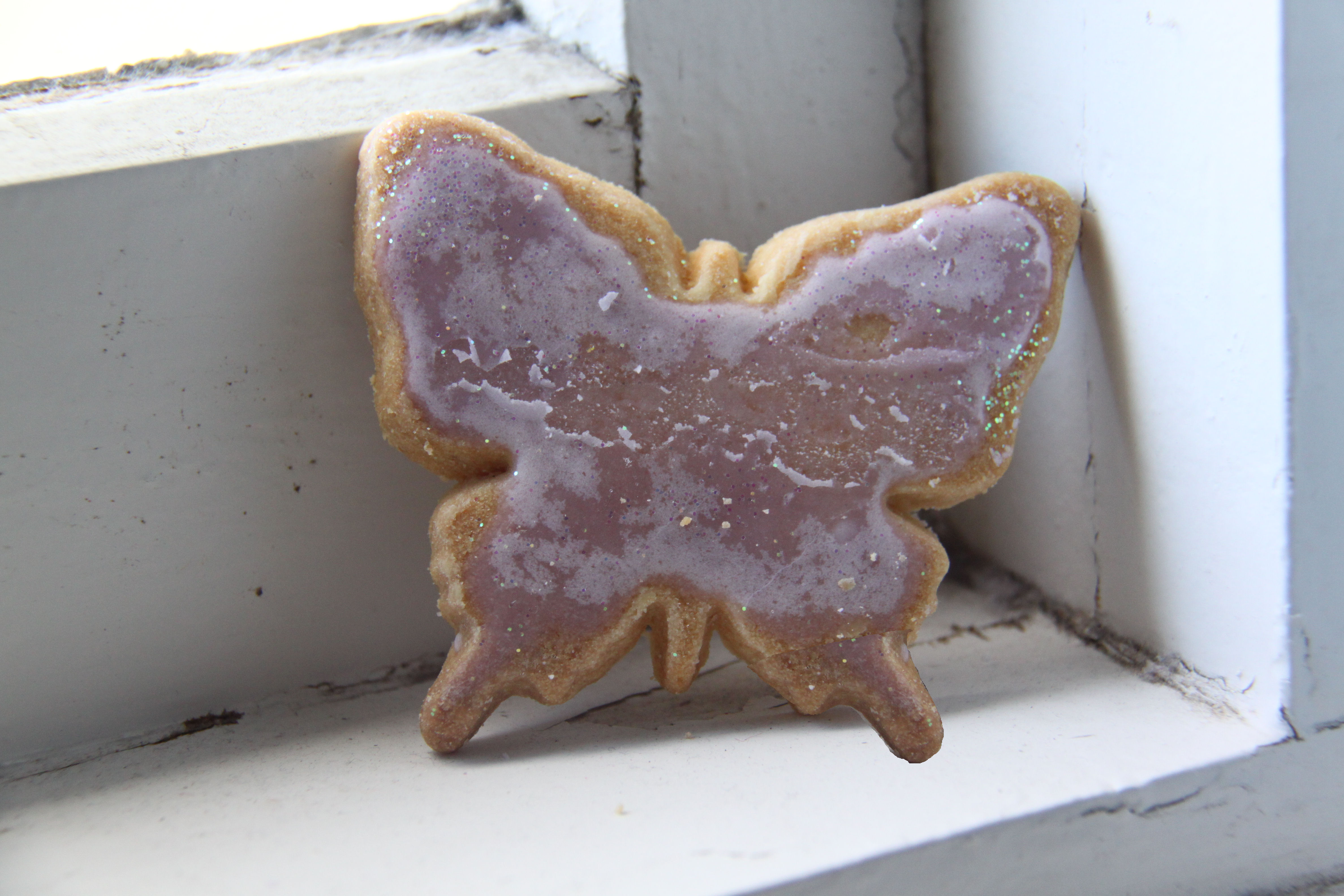
A lovely touch: a butter biscuit butterfly from the Elemental book launch.

I have been looking at the back blurb of Elemental by Amanda Curtin for a couple of weeks, itching for a good time to dive in. Every time I glanced at the protagonist’s name, ‘Meggie Tulloch’, my brain did strange and unusual things; the letters rearranged themselves and all I could see was ‘Maggie Tulliver’. So, I must be plain; I had The Mill on the Floss on my mind, colouring my experience of this text.  I read Eliot’s The Mill on the Floss many moons ago, but I’ll never forget Maggie Tulliver, and now I’ll never forget little  Fish Meggie, the Gutting Girl from the Top of the World. I’ll never forget the woman she became; the woman who speaks to her ‘Lambsie’ in an endearing Scottish brogue. She shares her agonies, of which there are many; her delights, of which there are few.  The delights are dotted neatly throughout, so, whilst this is a sad novel, poignant and painful, it is not entirely grim; rather, the small joys shine, diamond clear, aching in their beauty.

Maggie Tulliver and ‘Ginger’ Meggie Tulloch have more than a little in common as far as I can see. Both stories begin with an intense examination of childhood, and, from the get-go, these gals shine bright, fierce in their intellect. They are torn between a sense of familial obligation and a desire to escape and transcend the simple ways of village life. St Oggs and Roanhaven are primitive places and both women must contend with the rigid patriarchal conventions of a backwards world. Each has deeper intellectual interests than her environment and position as a female will allow. Ultimately, Maggie and Meggie (and most of the other women in Elemental) will be punished for their transgressions.

There’s punishment aplenty here; childhood punishment that makes me think of Blake’s chimney sweepers, the hard lives of working class children. But there’s also an interesting dichotomy, one with which I’m quite preoccupied, so I shall quote a short passage from Elemental:

“…the thing I venture would befuddle a child of today is this: in the scheme of the universe- your family, your village- you were one notch north of hindrance and two south of help… if you had a thought in your head there was none who would stoop to hear it and none to say you mattered the peeriest thing…I canna imagine a child of today taking it into their head that they were not the centre of all else.” (p.13)

I’m very interested in this idea about the ‘swing of the pendulum’ in regards to the state of childhood; this great shift we’ve seen since the industrial revolution and the Victorian idealisation of childhood. We do mollycoddle our little ones these days…

The women of Roanhaven carry their men on their backs through icy water to the Lily Maud and it’s a long time yet before any of the women will wrestle free. But wrestle free they do, some shackle free and in love, others on the wings of death, destined for tragedy. I want to be careful not give too much away; the pacing of the storytelling is superb; Curtin is an expert of the slow reveal. But I have to say this: I just about punched the air at a certain utterance from Meggie Tulloch on page 137: ‘I say lassies can make up their own minds about where they go.’  Unlike poor Kitta and Unty Jinna, Meggie finds a good man; a fellow who bids her to ‘make up [her] own mind’. Ahhhhh…see, there’s one of those aching, diamond clear joys.

We’re interested in similar themes, Amanda and I; the female experience, the intense nature of relationships between women. There’s a beautiful sense of female camaraderie expressed in Elemental; it’s the female version of mateship that we forget to mention in the Aussie mythology.  We see it amongst the Gremista girls and later, the women of Mills & Ware; we see it in Meggie’s bond with her sister Kitta, and later Clementina. So often, women, grandmothers, mothers and girlfriends, provide the emotional support that the men in their lives cannot. The sisterhood of Gremista provide Meggie with a romantic interlude in the way of an upturned box and a jug of ale on her wedding night. Similarly, the women of Mills & Ware inject joy in the war-time nuptials of Enzia and Enzia’s Joe (a neat reversal of the earlier patriarchal possessive namesakes) with a wedding cake that melts in the hot South Beach sun. More joy.

I’m going to leave Eliot behind here, though I’m happy to speak of the two authors in the same breath; Amanda’s prose just about had me buckled over with a whole body, physiological exclamation: every pore sang, ‘Oh, to write like that!’

I know…I gush. But to assume a voice such as Meggie’s is no small feat. I’m inspired: I’m hoping to play around with a radically different voice in my next short story. But I can’t deny that I had to read and reread the earliest chapters; it was the dialect that got me; it’s hard to make meaning when your semantic understandings don’t marry, when you’re constantly monitoring your own comprehension and flicking back to the glossary. It was an interesting exercise for me: I thought of my little students who suffer from Specific Language Impairment, who are constantly faced with these semantic difficulties. I was reminded of the deep value in reading good literature; in the acquisition of new world knowledge and vocabulary; the way we are enriched as we participate, we conjure, we magick from the air new meaning. Of course, it isn’t long before you’re swept out on the Roanhaven tide, til you know your quinies from your limmers. I’m not sure if I just grew accustomed to the vernacular, or if Curtin eased off on it as we edged deeper into the story, but how I grew to love the distinctive cadence and rhythm of Meggie’s Scottish tongue.

There’s heady relief in the latter part of the book when we travel from ice to sun, from fish stench to the sugary waft of Mills & Ware butter biscuits. There’s a real affection for this place, this wide-skyed place: Fremantle. I’d hazard a guess that some of the descriptions will leave West Australian language lovers weak at the knees.

There’s so much I could say about this book, but it’s time to close now. There’s the wonderful description of the puffin that made my son ask me why I was smiling, eyes closed; there’s the central mystery revolving around Brukie’s Sandy; there’s Granda Jeemsie, and the coda at the end. Read it.

Ooh…one last thing that I must not fail to mention: Oh, to write a sex scene like the one on page 195. It’s very, very good.

Reflections on a Festival

963341_10151698777023694_1909530911_o

I was brave, like Aslan. I did it; I spoke on a panel, on a stage, in front of a large number of people. I’m pretty confident about my ability to address primary school-aged students, but I have a long held fear of public speaking in front of adults. I’m here to say: I did it, and I’m thrilled. I actually really enjoyed myself.

I was nervous at the Friday night launch of Knitting and other stories, and then, serendipitously, the pianist began to play Satie’s Gymnopédie No.1. I’m not particularly superstitious, but it was an uncanny moment, a rather amazing coincidence. You see, this piece of music is one that I’ve revisited many times over the last couple of years. It speaks to me of a certain comfortable resignation about what is yet to come in one’s life. It sounds silly, I know, but the melody was soothing.

Things could have been different, I think, if the other panel members and various authors and personalities had not been so very warm and accommodating. I met some fine people at the Margaret River Readers and Writers Festival; some fine people with whom I felt a kinship of sorts. What I found most comforting was the authenticity with which these individuals spoke; they helped me to feel at ease.

I want to thank my dear darling friend, RedBec, for being my ‘pushy mum at the sidelines’ (her words). If it weren’t for her, and a number of other friends and family members, I may have been a chicken. When I was asked to speak on the panel, my immediate impulse was to retreat. ‘No. No. No.’ said every part of my physiology. But Bec spoke, loud and wise and clear as always: ‘You WILL do this Kristen.’ And I knew I would.

964774_10151679326652783_440474732_o

I’m always conscious of the modeling that I’m projecting to my children. I told my son that I was terrified, but that I would still ‘have a go’. I told him that I love writing; that I want to write stories for the rest of my life and that ultimately, I’d like to be published. I want my stories to be read. And sometimes, to edge closer to the dream, we have to step outside of our comfort zone. I’m grasping for a quote that I vaguely remember…I think it was Jeff Buckley who said something in a doco about how, quite often, the most amazing, most defining moments in life happen when we put ourselves on the line, step beyond our ‘safe place’. The weekend was all I had hoped for and more.

It’s funny though, sometimes the closer you get, the more elusive the dream of publication feels. If you could see inside my head right now, you’d see a hundred or more sticky notes. I want to capitalize on this momentum, but I’m also a pragmatist. I have school reports to write first; children’s clothes to launder; grocery shopping to do. One day, I’ll be able to make my writing my first priority. The time is not now, but I think it’s close. For now, I’ll fit it in around the edges and continue to ‘have a go’.

Programme

Here are a few of the people I met over the weekend. My son met Andy Griffiths and now he’s penning his first novel, complete with toilet humour, comics and Griffith’s abject and macabre themes. I’m so pleased that he came home as inspired as his mother.

913298_10151669300313694_173123836_n

My dutiful friend, Jen, took me on a mystery adventure during the week. We arrived at The Well Bookshop where we found ‘Knitting and other stories’ in a bookshelf alongside the bestselling, ‘The Rosie Project’. Big props to owners at The Well for supporting a small Western Australian press. My heart took a little leap when I noticed that my story is inhabiting the same shelf space as the new novel by Sarah Dunant. I know that my preoccupation with this publication makes me a bit of a skite, but seriously, an emerging writer needs all the validation she can get. I’m inspired and working on the novel like a little trooper.

ll944598_10151912649464358_1784175034_n